
Cobblestone Farm
Canandaigua, New YorkListen to the Story
The Lantern
A Fictional Narrative by Julia Lewiston (student pseudonym)
Scroll to read full transcript ↓
Sarah watched the shadows cast by the stuttering lamp flame shudder and twist across the slanted ceiling of the cramped hiding space. The light illuminated the weariness on the faces of her two companions. Earlier that evening, the wife of the house’s owner had left the oil lamp after bringing up bread and soup. Under Sarah’s exhausted gaze, the shadows seemed to take on monstrous form, and with each flicker of the lamp flame, would reconstitute into ominous new tableaux.
Years ago, when Sarah lived with her family, her mother would often remark on her fanciful mind. Yet seven years old she was afforded no time for idle daydreaming, as she had already begun doing small jobs in the main house. One day early on, she had been putting away clothes in a drawer while her aunt folded. Sarah had been remembering a game she had played with her brother the day prior, each trying to catch the most fireflies. Distracted from her work, she had found herself staring into the dresser drawer instead of turning around to receive a new pile of clothes to be put away. Her aunt had scolded her sharply for the incident, and Sarah had just been grateful that only her aunt, and not the missus, had been there to witness her negligence. This cruel lesson was reiterated to her a number of times after that first incident when her aunt had tried to protect her. Once by the master’s cane when she had taken too long fetching water. Once on a different plantation when she burnt a pot of beans. Over time, the lessons built on each other. Her imagination defeated, Sarah learned to work deftly and dutifully, with her head down.
Sarah turned her attention to the young woman at her left, the girl sitting cross-legged at her right. She knew the girl’s name was Anne, and she thought the woman’s name was Fran. They had been part of a larger group initially, of about five people, but they had been forced to split into two groups some time ago. Sarah had arrived here in the early morning before dawn, darkness still hanging thick over everything, her surroundings indiscernible in the gloom. The former stop had been a funeral parlor, and so they had made the journey here stowed in a hearse, all three of them together, cramped and jostled about. She supposed the choice of vehicle was resourceful, but it had seemed to her a bad omen. A person was told that freedom was the journey of the living, yet here they were, being borne toward its finality like the dead. For the whole journey, Sarah had been unable to do little more than sit with her knees drawn up, arms around her legs, nose buried in the collar of the coarse-woven coat she had been given. She sat the same way now. She wasn’t sure why, but it seemed to her that stillness was a necessity for this journey. It was the dead of winter, and this far north the cold penetrated deep and froze a person’s lifeblood. She was completely unprepared for it, having never experienced what one might consider a real winter. There was no insulation in the attic room, and so Sarah sat folded in on herself, so that she might feel the cold less acutely. Numbness and fatigue, anxiety and disorientation made it impossible to think of anything concretely. Uncertainty, that fearsome specter of the unknown, attended the proceedings in that frigid attic room like an ever present, unseen guest. That very specter made her afraid to speak to another person. When they had been led upstairs hours earlier, they had been warned to stay as quiet as possible. Silence and stillness it was then. Silence, like stillness, was essential. Sarah’s head ached dreadfully, from thirst and the anxious set of her jaw. More times than she could count that day, she had tried to pass the interminable hours by falling asleep. But tired as she was, worry and discomfort would compel her to alertness. Since she’d woken the night before and been led out into the freezing dark to the waiting hearse, she’d been plagued by a relentless knot below her ribcage.
When the hearse had pulled up to the safe house in the early hours of the morning, they’d had to wait while the driver spoke to someone else, the house’s owner. Sarah had been unable to hear the entirety of what was said, but she had thought she heard the driver say, “Aye, and there’s another on the way.” Had they been talking about an approaching snowstorm, or another group of fugitives?
Because speaking was hardly safe, Sarah didn’t know much about her travel companions. She was sure of Anne’s name—she’d heard it spoken at the safe house in Philadelphia, to which the young girl had been brought in the dead of night by a few of the local abolitionist folk. Sarah had been unable to sleep that night and had heard snippets of the conversation, carried out in harried whispers. She herself had withheld her name from all she’d encountered, and after thinking about Anne, she concluded that the owners of the safe house had known to expect this particular girl, Anne, and so had wanted to confirm her name. Now that she thought about it, Sarah realized she’d never heard the other young woman at her left introduce herself, so she didn’t really know why she’d thought her name was Fran. There had been an older woman named Fran at Colonel Reed’s in Tennessee who had walked with a limp, and Sarah had noticed this young woman walk with a limp as well. She wondered at its cause. Sarah looked at her own hands, knotted together on top of her knees. At the Waller plantation in Virginia, where she’d last been before she escaped, she’d made soap with the other female field hands. They’d worked vast kettles, mixing water and ash. The lye would splatter, and soap makers all had scars up to their elbows from the burns. They would then mix the lye with fat, usually lard. The rank pork odor was nearly impossible to dislodge, and the grease often inflamed and infected the burns. Sarah recalled one of many stories she’d heard about Riggs, the notorious overseer on the neighboring plantation, who had once, after plying his cowhide from the back of a field hand named Ben, added a treatment of lye. One of the slaves on the Waller plantation had heard about it from Ben’s wife, who had been certain that her husband was going to die. Everyone in the proximity was already accustomed to dreading the mention of Riggs’ name, but after news of what happened to Ben got around, people spoke of him in whispers. Sarah blinked furiously, trying to clear thoughts of the past from her agitated mind. As a young girl Sarah had wanted to write stories about the things she witnessed and experienced. But the slaves on the plantations where she had grown up had been kept from learning to read or write. If she could, she would write about hiding in that attic room, watching the shadows dance, the reckoning she now felt descending upon her. For the immediate moment, she was safe. Riggs was somewhere beyond the Mason-Dixon line, as were Stuart Waller and Thomas Reed, as was George Brandt, who had followed her around the Billings plantation when she was thirteen years old.
Lamplight flickered across her companions’ faces and sent shadows playing over the low slanting ceiling. The shadows morphed into the silhouettes of Reed and Waller and Brandt, Riggs and his cowhide. Sarah buried her face in the collar of her coat. She stretched her hand toward the meager flame, praying for a shred of warmth.
Gallery

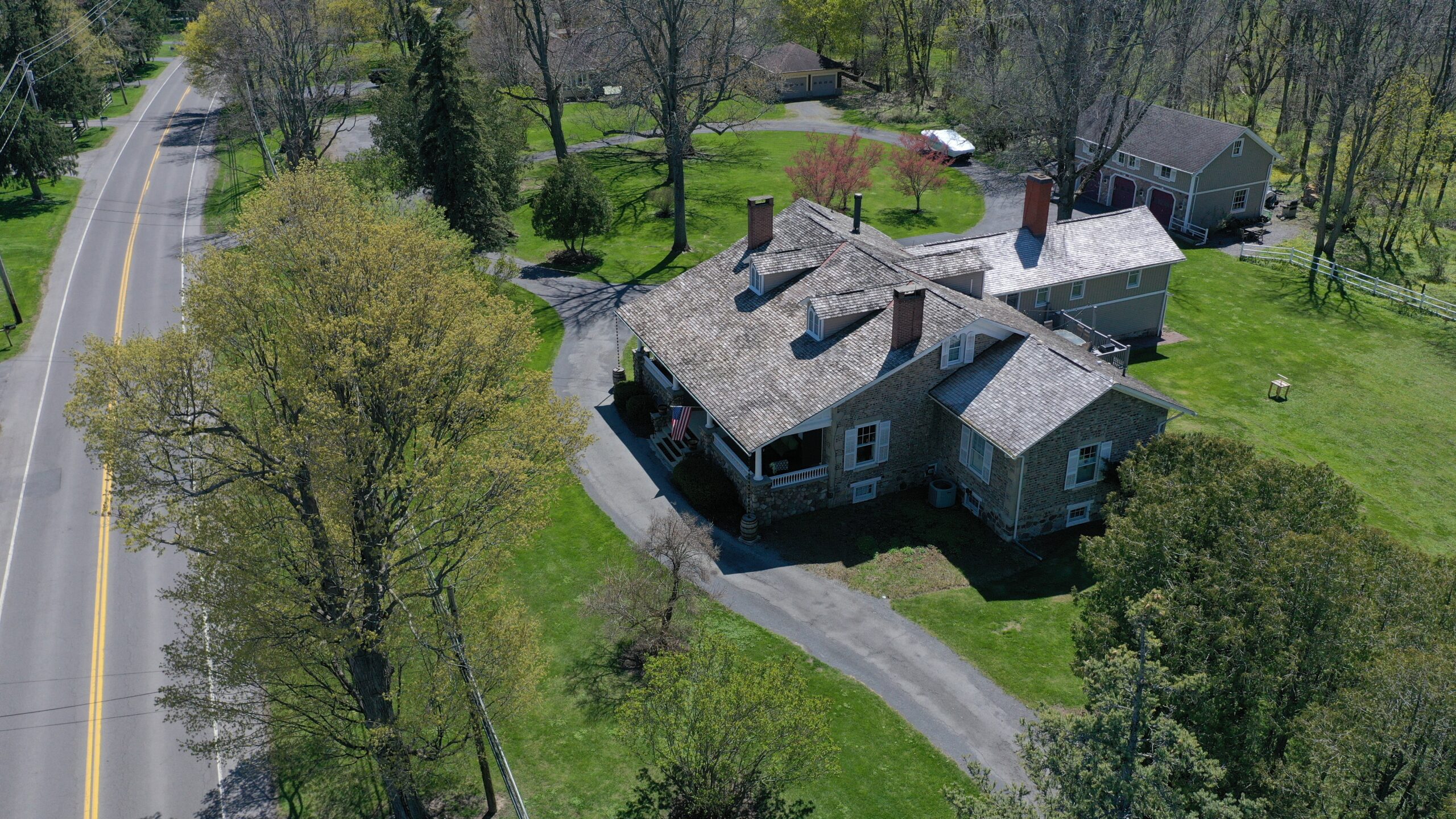

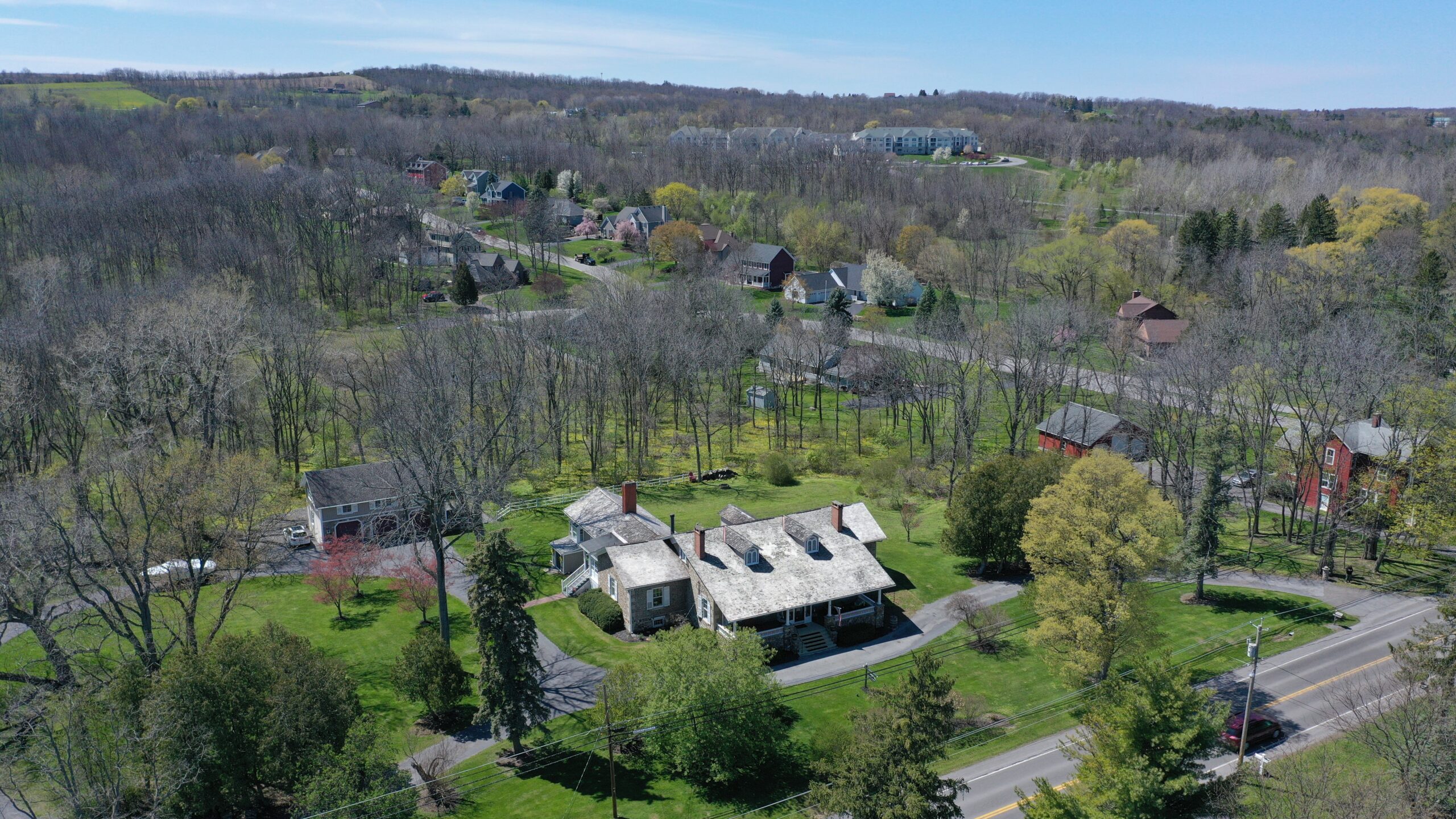

“The house was built by Isaac Parish. According to oral traditions, the freedom seekers were transported to the Cobblestone Farm from Naples, many in one of Uncle Billy Marks’ horse-drawn hearses. The fugitives were hidden in a secret room in the attic adjacent to the south wall of the house. They were led up to the attic where they walked on loose floorboards around the south chimney through a doorway and into a small room, which was six feet wide and ten feet long. The ceiling was five feet, four inches high at the peak, sloping down to four feet where the ceiling joined the walls. The room would have been stifling hot in summer—it had no windows—and bitter cold in the winter.”
Walter Gable. Uncovering the Underground Railroad in the Finger Lakes
Cobblestone Farm
3402 W Lake Rd, Canandaigua, NY 14424